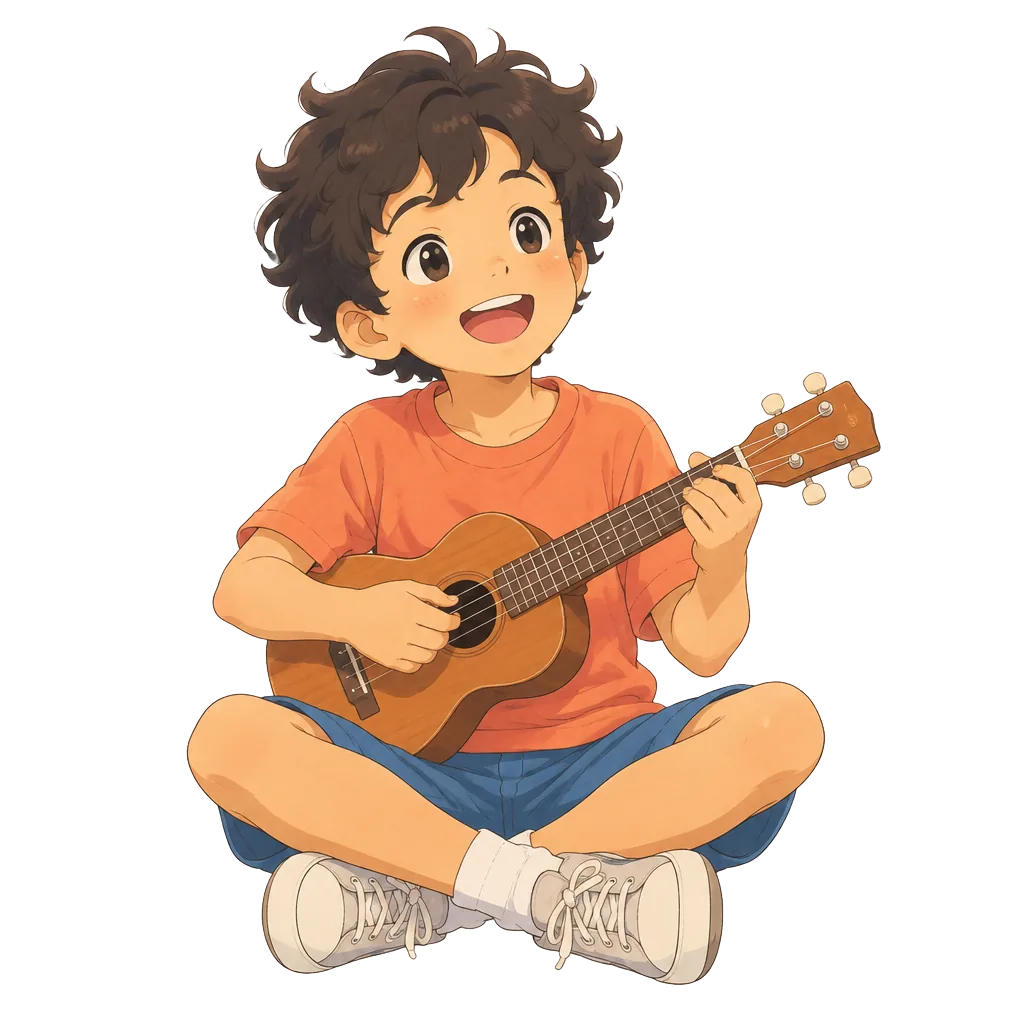
Ask most parents of kids with autism what their child loves, and music comes up again and again. A favorite song on repeat. A rhythm tapped on the table. A melody hummed during a hard moment. Music reaches kids who tune out other parts of the day.
At Luminary Learning we offer music lessons, not music therapy. That distinction matters, and this post explains it. But the reasons families choose music lessons are real: expression, listening, rhythm, social connection, and confidence.
We wrote this guide because so many parents ask the same questions before their child's first lesson. What will it actually look like? Will my child enjoy it? What if they are not interested in a traditional instrument? Those are good questions, and the honest answer is that a good music lesson bends around your child rather than asking your child to bend around a lesson plan.
Why Music Reaches Kids in a Different Way
Music is patterned and predictable in a way that much of daily life is not. A song has a beginning, a middle, and an end. A beat repeats. A chorus returns. For a child who finds surprises stressful, that structure can feel like solid ground.
At the same time, music leaves room for individual expression inside that structure. A child can play the same simple melody every session and still make it their own, faster one day, softer the next, with their own flourishes added in. That mix of steady structure and personal freedom is part of why music sessions can feel both calming and exciting at once.
Music also does not require eye contact, small talk, or reading social cues to be enjoyed. A child can sit beside a teacher, share a rhythm, and feel completely connected without a single word passing between them. For many families, that is the first time their child has experienced connection that did not depend on conversation.
What Music Lessons Can Support
Expression. Some kids find words hard and melody easy. Playing an instrument or singing gives them a channel for feelings that are bigger than vocabulary.
Listening. Music asks for careful listening: to pitch, to rhythm, to the other players. That listening practice happens in a context kids enjoy, which makes it easier to sustain.
Rhythm and timing. Keeping a beat is a full body skill. It organizes attention and movement, and many kids find steady rhythm calming and grounding.
Social connection. Making music with another person is connection without pressure. Duets, call and response, and group songs create shared moments that do not require constant conversation.
Confidence. Finishing a song, performing for family, or simply nailing a tricky passage builds the kind of confidence kids carry everywhere.
Memory and sequencing. Learning a song means holding a sequence of notes or beats in mind and recalling them in order. Practicing that sequence, over and over in a low pressure way, can make sequencing feel natural rather than effortful.
Body awareness. Whether a child is pressing piano keys, strumming a guitar, or striking a drum, music asks the body to coordinate in specific ways. Over time, many kids become more aware of how their hands, arms, and breath work together.
The Difference Between Lessons and Therapy
Music therapy is a clinical discipline delivered by credentialed music therapists, often with specific clinical goals. We do not provide it, and we would never claim to.
Music lessons are enrichment. A good teacher adapts to your child, celebrates their progress, and makes music joyful. Lessons can beautifully complement any therapy your child receives, and many families pair both. If your child's care team recommends music therapy, we encourage you to follow their guidance.
We think it helps to picture the two side by side. A music therapist works from a plan built around clinical goals, often set with input from other professionals on a child's care team. A music teacher works from your child's curiosity, building lessons around the songs, sounds, and instruments your child already loves. Both can matter for a family, and choosing one does not rule out the other.
How We Adapt Lessons
We start with your child's interests. A kid obsessed with a favorite movie gets to learn its theme. A kid who loves drumming on everything gets percussion first.
We control the sensory environment. Some kids need quiet instruments and soft dynamics. Some kids need to move while they play. Both are welcome.
We keep successes small and frequent. Rather than pushing toward a big recital, we build a chain of small wins: a scale, four measures, a full song. Each one is real progress your child can feel.
We also pay close attention to pacing. Some kids want to spend twenty minutes on one favorite phrase, and that is fine. Others want to move quickly from idea to idea. A good teacher notices which style fits a child on a given day and follows that lead rather than forcing a fixed script.
What a First Lesson Might Look Like
There is no single format, because every child is different, but most first lessons share a few things in common. The teacher spends time simply getting to know your child: what sounds they enjoy, what music already plays at home, and what makes them light up.
From there, the teacher offers a small, low pressure activity, maybe clapping a simple rhythm together, or exploring the sounds a keyboard or guitar can make. The goal of that first meeting is not mastery. It is comfort. A child who feels safe and curious in the first lesson is far more likely to look forward to the next one.
Tips for Starting at Home
Follow the joy. Start with music your child already loves, not with what seems proper for beginners.
Keep instruments visible and reachable. A guitar stand in the living room invites more practice than a case in the closet.
Make noise together. Family jam sessions, however silly, build positive associations with music making.
Pair music with movement if sitting is hard. Marching to a beat, clapping patterns, and dancing count as real musical learning.
Tell us what works. If your child has a favorite instrument, song, or sensory preference, we build it into their sessions.
Let go of the idea of a perfect practice routine. A few minutes of singing in the car or tapping along to a favorite song counts, and consistency matters far more than length.
A Note for Parents
You do not need any musical background to support this. What you need is willingness to let your child explore sound in their own way. Some of the most joyful sessions we have seen started with a child who was 'not musical' at all. They just needed the right door in.
It is also worth remembering that progress in music lessons does not always look like a polished performance. Sometimes it looks like a child who used to cover their ears now humming along, or a child who avoided new activities now asking for their next lesson. Those quieter shifts are often the ones parents remember most.
Frequently Asked Questions
+Do you provide music therapy?
No. We provide music lessons, which are enrichment. Music therapy is a clinical service delivered by credentialed therapists, and we encourage families to work with their care team if they are seeking therapy.
+What instruments do you teach?
We tailor to your child's interests. Common starting points include piano or keyboard, percussion, and guitar. Tell us what your child gravitates toward.
+My child covers their ears at loud sounds. Can lessons still work?
Yes. We control the sensory environment, use soft dynamics and quieter instruments when needed, and follow your child's lead.
+Can we use our SDP budget for music lessons?
Many families use Self Determination Program budgets for our services. Confirm with your regional center and FMS whether it fits your child's plan.