
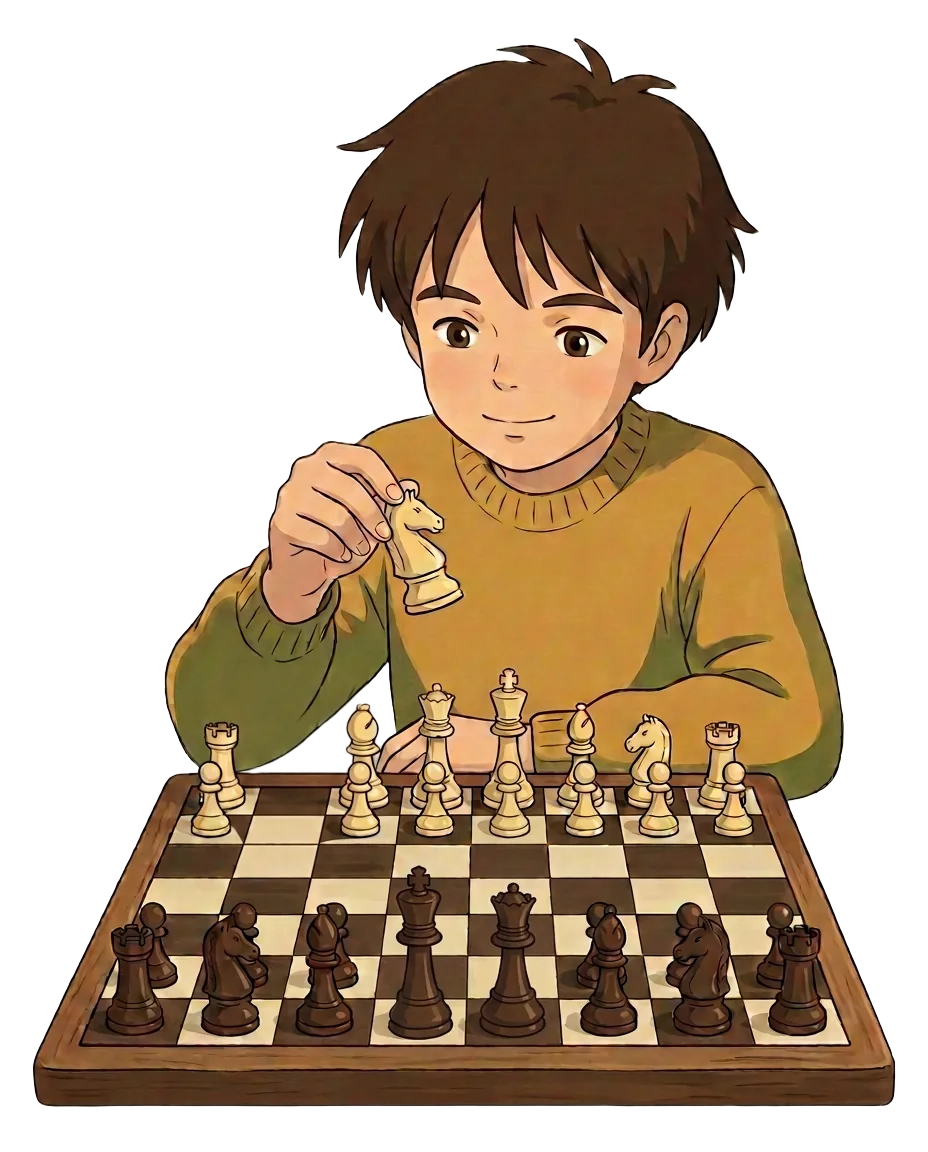
Chess has been part of my life for 15 years. I have played in tournaments, coached beginners, and taught hundreds of kids. The most meaningful work I have ever done at a chessboard was with children with autism and ADHD, because the game rewards exactly the things they are quietly building.
This post is written from my experience as a coach. It is not a medical claim. Chess lessons are enrichment, and what they can support is focus, patience, and skills that carry into life.
I want to walk you through why I keep coming back to chess as a tool for these kids, what a real lesson looks like, and what you can try at home even if you have never picked up a piece. My hope is that by the end of this post you have a clearer sense of whether chess might be a good fit for your child, and some practical ways to find out.
Why Chess Works for These Kids
Chess is a game with rules that are always true. The knight always moves the same way. The board always looks the same. For a child who finds the world unpredictable, that consistency is a relief. Inside the 64 squares, effort and attention pay off in visible, concrete ways.
Chess is also turn based. There is no rush to respond the way there is in fast conversation or team sports. A child who needs extra processing time gets it by design. The game waits for them.
And chess is visual. Moves can be seen, pointed at, and replayed. Many kids who struggle with abstract instruction light up when learning becomes something they can watch happen on the board.
There is also a social simplicity to chess that I have grown to appreciate. Two players sit across from each other with a shared, clear goal. There is no need to guess at unspoken social rules or read a group of shifting faces. The conversation is the game itself, move and response, and that structure can feel like a relief for a child who finds open ended social time exhausting.
Chess also gives a child a sense of ownership. Every move on the board was chosen by them. Nobody moved the piece for them, and nobody can take that choice back. For kids who spend much of their day being guided, corrected, or redirected by well meaning adults, that small taste of control matters more than it might seem.
What Chess Can Support
Focus. A single game asks a child to hold a plan in mind, watch for threats, and return attention to the position again and again. That is real practice for sustained attention, and it happens inside a game kids genuinely want to play.
Planning. Before every move, a chess player asks what happens next. Kids learn to think ahead in small, achievable steps: if I move here, then what? That habit transfers to schoolwork and to life.
Turn taking and patience. Waiting for your opponent's move is built into the game. Kids practice waiting, watching, and staying engaged without interrupting.
Handling losses. Every chess player loses. A good coach turns each loss into a puzzle: what would we change next time? Over time, losing becomes information instead of disaster. For many kids, that reframe is the biggest gift chess offers.
Working memory. Keeping track of where pieces are, what was just threatened, and what a plan was two moves ago asks a child to hold several pieces of information at once. This is quiet, repeated practice, dressed up as a game a child wants to play again tomorrow.
Flexible thinking. A plan that worked last week might not work today because the position is different. Chess gently pushes kids to notice when an old plan no longer fits and to try something new instead of forcing the familiar approach to work.
Communication about strategy. Many kids find it easier to talk about a chess position than about their own feelings. Talking through why a move was good or risky gives a low pressure way to practice explaining reasoning out loud, a skill that helps far beyond the board.
What a Lesson Looks Like
A typical session starts with a warm welcome and a short puzzle to settle in. Then comes a small lesson built around your child's level, maybe how the knight forks or how to defend a pin. After that we play, with gentle coaching in the moment. We end with a recap so parents know what we practiced.
For kids who are new to chess, sessions begin even smaller: learning pieces through stories, playing mini games with just a few pieces, and celebrating every small win. The first goal is not skill. The first goal is that your child wants to come back.
Pacing matters as much as content. Some kids need movement breaks between the lesson and the game. Some do better with the same warm up puzzle every single week because repetition is comforting rather than boring. A coach who pays attention learns these preferences quickly and builds the session around them instead of asking the child to adapt to a fixed format.
Sensory comfort is part of the plan too. Some kids prefer a quiet room and soft lighting. Some like to hold a fidget item while they think. Some want the pieces lined up neatly before we start and get unsettled if they are not. None of this gets in the way of learning chess. If anything, honoring these preferences is what allows real learning to happen.
Tips for Parents at Home
Play short games. A full game can be long. Starting with pawn only games or three piece endgames keeps sessions successful and fun.
Narrate your thinking out loud. Saying 'my queen is trapped, so I need to move her somewhere safe' shows your child how players think. Do not expect them to narrate back right away.
Celebrate good moves, not just wins. 'I loved how you protected your king' builds a stronger relationship with the game than any scoreboard.
Keep the board out. A set left on the kitchen table invites spontaneous games, which is where the real love of chess is born.
Follow their pace, not the clock. If your child wants to spend fifteen minutes just moving pawns back and forth to feel how they capture, let that be the whole session. There is no required amount of progress each week.
Use chess language outside the game. Phrases like 'let's think two steps ahead' or 'that is a good trade' can carry over into homework or daily routines once your child is comfortable with them at the board.
Watch for the end of the tank. If your child starts fidgeting more, answering slower, or losing interest mid move, that is a signal to stop, not a signal to push through. Ending on a good note keeps the next session easier to start.
Common Questions I Hear from Parents
Parents often ask me whether their child needs to be especially calm or especially good at sitting still before starting chess. In my experience it is often the opposite: chess gives a child something worth sitting still for, rather than asking them to sit still first and learn something later. The engagement often comes before the stillness, not after it.
Another common question is what happens on a hard day, when a child is overwhelmed before the lesson even starts. On those days we shorten the plan. Maybe we only do the puzzle. Maybe we just set up pieces and talk about their names. A short, calm session that ends well is worth far more than a full session that ends in frustration.
A Final Word
I have watched kids who could not sit through dinner sit happily through a chess lesson. Not because chess is magic, but because someone met them where they were and made the game theirs. That is what we do in every session: see the kid first, then teach the game.
If you are considering chess for your child, know that there is no wrong place to start. Some kids begin with a full board and move quickly. Others spend weeks with just a king and a few pawns. Both are real progress. What matters most is that your child leaves each session a little more confident than when they arrived, and a little more curious about what comes next.
Frequently Asked Questions
+Is chess enrichment or therapy?
Chess lessons at Luminary Learning are enrichment. They can support focus, patience, and planning, but they are not therapy and we do not make medical claims.
+What age can start chess lessons?
We teach kids and teens ages 4 to 17. Young children start with piece recognition and mini games rather than full games.
+Does my child need to know the rules already?
No. Many of our students learn the rules in their first few sessions. Lessons are built around your child's level.
+My child loses badly and gets upset. Should we still try?
Yes, gently. Coaches can structure games so losing is manageable, like playing with fewer pieces or adding win conditions. Handling losses is a skill chess is especially good at teaching.